|
 |
||||||||||||||||||||||||||||||||
 |
|||||||||||||||||||||||||||||||||













| Facts > Pagan Ideas > Raised From the Dead | ||||
| Start here > | Slavery | Dreams | Demons | Soul | God | Heaven |
 |
Hell | Miracles | Prophecy | Eternal Life | Prayer | Godmen |
| Virgin Birth | Phony quotes | Secret | Logos | Monotheism | Ethics | |
| Angels | Sacrifice | Baptism | Eucharist | Stuff we forgot | Mystery Religions | |
| Dying and Rising Gods | Raised from Dead | Savior | ||||
 |
For the ancients, Raised From the Dead was common sense. |  |
If
Christ be not risen, your faith is futile. After
nightfall they came to the tomb, burst open
the doors, came in and took away the finery,
and saw that Anthia was still alive.
We opened the tomb and found the corpse alive.
|
 |
||
It's a big deal, but away back in Bible times it was not a uniquely Christian deal—in a minute you'll read lots of blue boxes quoting ancient authors writing about people raised from the dead. But first, let's talk about why. If you've read the other stuff here at POCM > Facts > Pagan Ideas, it'll be easy for you to see how Raised From the Dead was a common sense part of the ancients' ideas about how the universe works. Let's review. |
 In
our version of Christianity, the key miracle about
Jesus is that He died and came back to life. He
was dead, then He stood up and walked around. Chances
are He didn't do that on His own, what with at the time
Him being dead and all. Somebody raised
Jesus from the dead. But who?? Say, wait a minute...
I bet it was God! God raised Jesus
from the dead, and He'll raise us too! Raised
From the Dead is a big deal.
In
our version of Christianity, the key miracle about
Jesus is that He died and came back to life. He
was dead, then He stood up and walked around. Chances
are He didn't do that on His own, what with at the time
Him being dead and all. Somebody raised
Jesus from the dead. But who?? Say, wait a minute...
I bet it was God! God raised Jesus
from the dead, and He'll raise us too! Raised
From the Dead is a big deal.|
Well look, if souls weren't extinguished, if they existed somewhere, obviously stuff could happen to them. Various traditions made up various stories about what happens to souls. In Egypt Ka-souls (or maybe it was Ba-souls; I have trouble keeping these things straight) stood up out of sarcophaguseses and read Pyramid Texts that guided them to Egyptian Underground Heaven. In Italy, believers-in-Dionysus-souls used spells on golden tablets to navigate past Hades' Lake of Forgetting. In Judea "souls are immortal and continued forever", and after death "rejoice and mount upward, and this is like the opinion of the Greeks." [Josephus, Jewish War, 2.8.2] |
By the way |
|
Not all early Christians believed Jesus brought salvation by rising from the dead. The Didachae did not mention His resurrection. Neither did Q. Gnostic Christians got their salvation not through Jesus's resurrection but through His's sacred wisdom teaching. For the Gnostics, to be saved you hadda go to school and learn wisdom and stuff. I think you can see why our version of Christianity is better. |
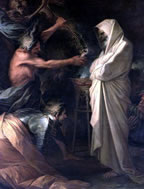 For
the ancients, people who were dead were not completely
gone, their essence did not cease to exist. When
people died, their soul left their body and went somewhere.
Souls hung around as spirits or ghosts, or they went
down under the earth to Hades, or up in the Sky to be
with the Gods and other divine beings.
For
the ancients, people who were dead were not completely
gone, their essence did not cease to exist. When
people died, their soul left their body and went somewhere.
Souls hung around as spirits or ghosts, or they went
down under the earth to Hades, or up in the Sky to be
with the Gods and other divine beings.|
Outside formal traditions, the happenstance of daily life was guided by invisible magic beings: fate, gods major and minor, daemons, spirits, ghosts, angels. Here's where the common sense part comes in. It only made sense that these important invisible beings could be contacted and influenced. From the top of society to the bottom, people interacted with invisible magic beings. |
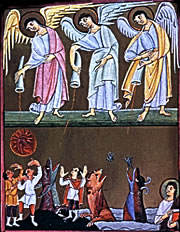 |
Governments consulted oracles before deciding on war. Generals traveled with priests who consulted sacrifices—"the holy things"—before battle. Socrates consulted his personal daimon. Priest Plutarch interpreted the Delphic Pythia. Cicero read the flight of birds to discover the will of the Gods. Jewish King Saul delayed battle to consult God through dreams, magic rituals (Urim) and prophecy, and when those failed, he found a "necromancer," (εγγαστριμυθον) to call up a spirit from the dead [Old Testament, 1 Samuel 28].
|
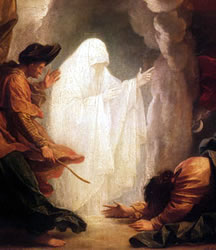
| In daily life the rich and the poor consulted a menagerie of magic-dealing professionals: temple priests, dream interpreters, exorcist-healers, fortune tellers, spell casters. The ancients described these people with a technical vocabulary that we moderns have forgotten. Nowadays we say the bible's Witch of Endor was a necro-mancer, meaning one who called on the dead to prophesy. The Greeks, and the Jews who wrote the Greek version of the Old Testament, used the ancient term εγγαστριμυθον, "stomach speaker." |
The fanciful superstitionist accounts every little distemper in his body or decay in his estate, the death of his children, and crosses and disappointments in matters relating to the public, as the immediate strokes of God and the incursions of some vindictive daemon. Plutarch, On Superstition Section 7, which you can read at Perseus. |
|
The ancients' nuance is lost to us, but the big idea isn't: in the ancient world dead people were somewhere, and that meant they could do stuff. |
| Reasons preview | skip |
We know a couple background facts. First, in the ancient world, dead people were not extinguished, they existed somewhere. Some lived in Hades, some in the Elysian fields, some, if they were especially swell, ascended into the Sky and lived with the Gods. For us this is silly myth we can't take seriously. But as you're reading the blue boxes remember, for the people who wrote these texts, this was reality. So write that down. In the ancient world, after they died, people who were especially swell ascended into the Sky and lived with the Gods. Second, back in Bible times the difference between Gods and men was not absolute. Gods came to Earth looking like people. In the ancient world, people turned into Gods. Absorbing Pagan Ideas Back in Bible times people rising from the dead was a common sense part of how the universe worked. Lots of people rose from the dead. Jesus was one. Christianity was a product of it's time and place. The Apologists' Reply |
 Here
in the Facts section I'm not allowed to tell you what
I think, but while you read these ancient blue-box texts
describing people being raised form the dead, it'll
help you to keep in mind POCM's basic question:
Here
in the Facts section I'm not allowed to tell you what
I think, but while you read these ancient blue-box texts
describing people being raised form the dead, it'll
help you to keep in mind POCM's basic question: | Greggy's Guesses | skip |
|
The idea that Jesus was God came first, the stories showing how he was God came second, made up to fit the standard ancient ideas about Gods and their powers and place in the universe. Christianity is a product of its time and place. |
 I
know you don't care what I think. I don't want
you to care what I think. I want you read the
facts here at POCM, and decide for yourself. But I did
promise to say what I think.
I
know you don't care what I think. I don't want
you to care what I think. I want you read the
facts here at POCM, and decide for yourself. But I did
promise to say what I think. I
myself don't see how it could have been possible for
early followers of Jesus not to believe he was
raised from the dead. Jesus was a swell fellow.
He died. Away back then, after they died swell people
ascended to the Sky and lived with the Gods. If you
were a follower of Jesus who really believed He was
swell, and you knew He died, you pretty much had to
believe He must have ascended to Heaven to be with God.
I
myself don't see how it could have been possible for
early followers of Jesus not to believe he was
raised from the dead. Jesus was a swell fellow.
He died. Away back then, after they died swell people
ascended to the Sky and lived with the Gods. If you
were a follower of Jesus who really believed He was
swell, and you knew He died, you pretty much had to
believe He must have ascended to Heaven to be with God.
| Common Sense | Swell Guy | Greek Religion | Bible Religion |
Common Sense
|
|
|
|
|
While Jesus was still speaking, some men came from the house of Jairus, the synagogue ruler. “Your daughter is dead,” they said. “Why bother the teacher any more?” Ignoring what they said, Jesus told the synagogue ruler, “Don't be afraid; just believe.” He did not let anyone follow him except Peter, James and John the brother of James. When they came to the home of the synagogue ruler, Jesus saw a commotion, with people crying and wailing loudly. He went in and said to them, “Why all this commotion and wailing? The child is not dead but asleep.” But they laughed at him. After he put them all out, he
took the child's father and mother and the disciples
who were with him, and went in where the child was.
He took her
by the hand and said
to her, "Talitha koum!" (which means, "Little
girl, I say to you, get up!" ). Immediately the
girl stood up and walked around (she was twelve
years old). |
|
A
girl had died
just in the hour of her marriage, and the bridegroom
was following her bier lamenting as was natural his
marriage left unfulfilled, and the whole of Rome was
mourning with him, for the maiden belonged to a consular
family. Apollonius then witnessing
their grief, said : "Put
down the bier, for I will stay the tears that you are
shedding for this maiden." And withal
he asked what was her name. The crowd accordingly thought
that he was about to deliver such an oration as is commonly
delivered as much to grace the funeral as to stir up
lamentation ; but he did nothing of the kind, but merely
touching her and whispering in secret some spell over
her, at once woke up the maiden from her seeming death
; and the girl spoke out loud, and returned to her father's
house, just as Alcestis did when she was brought
back to life by Hercules. |
 The
1st century AD godman Jesus uses magic words to raise
a girl from death—she was only asleep
The
1st century AD godman Jesus uses magic words to raise
a girl from death—she was only asleep The
1st century AD godman
The
1st century AD godman
 |
Ch 26: "What is there surprising in that?" said Antigonus : "I know a man who came to life more than twenty days after his burial, having attended the fellow both before his death and after he came to life." |
|
Lucian, Lover of
Lies, Chapter 26 (2d century AD), -- which you can find
in: Henderson, Jeffrey. Lucian
III Loeb 130, (1921/ 2004), pg. 361 |
|
|
"I myself was formerly more incredulous than you in regard to such things, for I thought it in no way possible that they could happen; but when first I saw the foreign stranger fly—he came from the land of the Hyperboreans, he said— I believed and was conquered after long resistance. What was I to do when I saw him soar through the air in broad daylight and walk on the water and go through fire slowly on foot?" "Did you see that?" said I — "the Hyperborean flying, or stepping on the water?" "Certainly," said he, "with brogues on his feet such as people of that country commonly wear. As for the trivial [page 341] feats, what is the use of telling all that he performed, sending Cupids after people, bringing up supernatural beings, calling mouldy corpses to life (ανακαλων), making Hecate herself appear in plain sight, and pulling down the moon ? |
|
Lucian, Lover of
Lies, Chapter 13 (2d century AD), -- which you can find
in: Henderson, Jeffrey. Lucian
III Loeb 130, (1921/ 2004), pg. 341 |
|
Ancient novels |
|
|
Theron confessed. He began his story. "I saw riches being enclosed in the tomb and assembled a gang of robbers. We opened the tomb and found the corpse alive. We carried everything away and put it in our cutter. We sailed to Miletus, sold the woman alone, and then started to take everything else to Crete; but we were driven out into the Ionian Sea by winds, and you have seen what happened to us." He told the whole story but failed to mention one thing the name of the man who had bought Callirhoe. |
Chariton, Chereas and
Callirhoe, 3.4 (1st century AD?), -- which you can find
in: Reardon, B. P. Collected
Ancient Greek Novels . (1989), pg. 57
|
|
|
6.13 "I cannot at the moment," replied the old woman. "I have certain rites for the dead to perform that can be performed only at night.... |
|
Magic words raise a man from the dead >>
|
6.14 ... Supposing herself now secure against any intrusion or observation, the old woman began by digging a pit, to one side of which she lit a fire. After positioning her son's body between the two, she took an earthenware bowl from a tripod that stood beside her and poured a libation of honey into the pit, likewise of milk from a second bowl, and lastly of [page 486] wine from a third. Then she took a cake made out of fine wheat flour and shaped into the effigy of a man, crowned it with bay and fennel, and flung it into the pit. Finally she picked up a sword and, in an access of feverish ecstasy, invoked the moon by a series of grotesque and outlandish names, then drew the blade across her arm. She wiped the blood onto a sprig of bay and flicked it into the fire. There followed a number of other bizarre actions, after which she knelt over the dead body of her son and whispered certain incantations into his ear, until she woke the dead man and compelled him by her magic arts to stand upright. |
|
Magic words raise a man from the dead >> |
.... the old woman had now begun to question the corpse in a somewhat louder voice. What she wanted to know was whether the corpse's brother, her one surviving son, would live to return home. The dead man made no reply, merely nodded his head in a way that left some doubt as to whether his mother could expect her wishes to be fulfilled or not. Then he suddenly collapsed and fell flat on his face. The old woman rolled the body over onto its back and persisted with her questions. Employing apparently more powerful spells of compulsion this time, she repeated her string of incantations into his ears, and, leaping, sword in hand, from fire to pit, from pit to fire, she succeeded in waking the dead man a second time and, once he was on his feet, began to put the same questions to him as before, forcing him to use speech as well as nods of the head to make his prophecy unambiguous. |
| Heliodoros, An Ethiopian
Story (Aithiopika), 6.3- 4 (3d century AD?), -- which
you can find in: Reardon, B. P.. Collected
Ancient Greek Novels . (1989), pg. 185- 6
|
|
|
While they were delayed at sea for some days and as many nights, the girl gave birth in the ninth month. But the placenta failed to be discharged, her blood clotted, her breathing became constricted, and she suddenly died. …After the coffin had been made, he adorned it with royal accoutrements, placed the girl in the coffin, and… Weeping bitterly, he ordered that the coffin be thrown into the sea. Three days later waves cast up the coffin. It came to rest on the shoreline of Ephesus, not far from the estate of a doctor… the doctor eagerly opened it, and, seeing a very beautiful girl adorned with royal ornaments and lying in a state of apparent death…ordered that a pyre be constructed immediately. |
|
THE STORY OF APOLLONIUS KING OF TYRE |
But while the pyre was being carefully and expertly constructed and assembled, a medical student of youthful appearance but mature judgment arrived. When he saw the corpse of the beautiful girl being placed on the pyre, he looked at his teacher and said, "What is the cause of this recent unexplained death?" The teacher said: "Your arrival is timely; the situation requires your presence. Take a jar of unguent and pour it over the body of the girl to satisfy the last rites." |
|
The young man took a jar of unguent, went to the girl's bier, pulled aside the clothing from the upper part of her body, poured out the unguent, ran his suspicious hands over all her limbs, and detected quiescent warmth in her chest cavity. The young man was astounded to realize that the girl was only apparently dead. He touched her veins to check for signs of movement and closely examined her nostrils for signs of breathing; he put his lips to her lips, and, detecting signs of life in the form of slight breathing that, as it were, was struggling against false death, he said, "Apply heat at four points." When he had had this done, he began to massage her lightly, and the blood that had coagulated began to flow because of the anointing.'"When the young man saw this, he ran to his teacher and said: "Doctor, the girl you think is dead is alive. To convince you, I will clear up her obstructed breathing." |
|
|
With some assistance he took the girl to his bedroom, placed her on his bed, opened her clothing, warmed oil, moistened a woolen compress with it, and placed the compress on the upper part of the girl's body. Her blood, which had congealed because of severe cold, began to flow once heat was applied, and her previously obstructed breathing began to infiltrate to her innermost organs. With the clearing up of her veins, the girl opened her eyes, recovered her breath, and said in a soft, indistinct voice, "Please, doctor, do not touch me in any way other than it is proper to touch the wife of a king and the daughter of a king." |
|
| Apollonius King of Tyre,
Ch 25 - 7 (3d century AD?), -- which you can find in:
Reardon, B. P.. Collected
Ancient Greek Novels . (1989), pg. 752- 4
|
|
|
But after all, I will tell you I saw him do in the house of Glaucias, son of Alexicles. "Immediately after Glaucias' father died and he acquired the property, he fell in love with Chrysis, the wife of Demeas. I was in his employ as his tutor in philosophy, and if that Iove-affair had not kept him too busy, he would have known all the teachings of the Peripatetic school, for even at eighteen he was solving fallacies and had completed the course of lectures on natural philosophy. |
|
"At his wit's end, however, with his love-affair, he told me the whole story; and as was natural, since I was his tutor, I brought him that Hyperborean magician at a fee of four minas down (it was necessary to pay something in advance towards the cost of the victims) and sixteen if he should obtain Chrysis. |
|
|
The man waited for the moon to wax, as it is then, for the most part, that such rites are performed; and after digging a pit in an open court of the house, at about midnight he first summoned up for us Alexicles, Glaucias' father, who had died seven months before. The old gentleman was indignant over the love-affair and flew into a passion, but at length he permitted him to go on with it after all. |
|
| Lucian, Lover of Lies,
Chapter 14 (2d century AD), -- which you can find in:
Henderson, Jeffrey.
Lucian III (1921/ 2004), pg. 341
|
|
Now at this point she was alone, while Perilaus was still carousing with his friends. She made an excuse that the tension had made her thirsty and ordered one of the servants to bring her water to drink. And when a cup was brought, she took it while no one was in the chamber with her, threw in the poison, and wept. |
|
|
"Habrocomes, my darling,"she cried, "as you see I am discharging my promises and am on my way to you; it is a sad road, but an inevitable one; welcome me gladly and make my life with you in the other world a happy one." With this she drank the drug and immediately fell into a deep sleep; she collapsed to the ground, and the drug took its full effect. |
|
|
[Chapter 7] When Perilaus came in and immediately saw Anthia lying there, he was dumbfounded and cried out, and there was a great deal of commotion in the household: they felt a welter of emotions-grief, fear, and terror. Some pitied the girl who had apparently died; others shared Perilaus's grief; while all mourned the tragedy. Perilaus tore his clothes and fell on the body "My poor dear girl," he exclaimed, "you have deserted your lover before your marriage, after only a few days as the promised bride of Perilaus. What kind of bridal suite will I take you to-the tomb! Happy Habrocomes, whoever he was; a fortunate man, indeed, to receive such gifts from his beloved!" Perilaus lamented in this fashion, fondly embracing her body all over and clinging to her hands and feet. "Poor bride," he exclaimed, "and still more unhappy wife." He laid her out in all her finery and surrounded her with a great quantity of gold. And no longer able to bear the sight, when day came he put Anthia on a bier (she was still lying insensible) and took her to the tombs near the city. And there he laid her in a vault, after slaughtering a great number of victims and burning a great deal of clothing and other finery. |
|
|
[Chapter 8] When he had carried out the accustomed rites, he was taken back to the city by his household. But Anthia, left in the tomb, recovered her senses, realized that the poison was not fatal, and moaned and wept. "The poison has played me false!" she exclaimed. "It has barred the way of happiness back to Habrocomes. My misery is total; I have been cheated, even of my own wish to die. But by remaining in the tomb I can still do the poison's work by starving to death. No one would take me from here, nor could I look upon the sun nor will I go to the light." With this she strengthened her resolve and steadfastly waited for death. [page I52] |
|
|
Meanwhile some pirates had found out that a girl had been given a sumptuous burial and that a great store of woman's finery was buried with her, and a great horde of gold and silver. After nightfall they came to the tomb, burst open the doors, came in and took away the finery, and saw that Anthia was still alive. They thought that this too would turn out very profitable for them, raised her up, and wanted to take her. But she rolled at their feet and kept pleading with them. |
|
|
"Whoever you are, take away all this finery; take all there is and everything that is buried with me, but spare my body. I am a sacrifice to two Gods, Love and Death. Leave me to devote myself to them in peace. By the Gods of your own country, do not expose me to the daylight, when my misfortunes deserve night and darkness." So she pleaded, but she could not persuade the pirates: they brought her out of the tomb, took her down to the sea, put her into their skiff, and brought her to Alexandria. And they looked after her on the ship and tried to console her. But she took to moping once more over her dreadful misfortunes, as she wept and wailed. |
|
|
Xenophon of Ephesus,
An Ephesian Tale, 3.6 -8 (2d or 3d century AD) —which
you can find in: Reardon, B. P. Collected
Ancient Greek Novels . (1989), pg. 151-2 |
|
|
And now he cries out repeatedly 'You set free a convict sentenced to death.' What death? What conviction? Tell me the grounds for his death sentence. 'He has been judged guilty of murder,' he says. He has committed murder then? Tell me who it was. The woman whom he killed and who you said had been murdered you see here alive. You would not be so foolhardy as still to accuse the same man of her murder. For this is not a ghost of the girl; Aidoneus has not sent the murdered woman to haunt you. |
|
Achilles Tatius,
Leucippe and Clitophon, 8.9 (2d century AD), -- which
you can find in: Reardon, B. P. Collected
Ancient Greek Novels . (1989), pg. 277 |
|
|
16 And I said: "Do not pressure me to break my solemn undertaking to the dead. We have not left her region until we reach another shore. Have you not heard that she died at sea? Then I am still sailing over Leukippe's [page 241] grave. Perhaps her ghost is circling about the ship even now. They say that souls who die in the sea never descend to Hades but wander over the water. And is this an appropriate place to consummate any marriage? Our wedding night on choppy waves? Our first time on a rocking boat? Surely you want our bridal bed to stay in one place?" |
|
Achilles Tatius,
Leucippe and Clitophon, 5.16 (2d century AD), -- which
you can find in: Reardon, B. P. Collected
Ancient Greek Novels . (1989), pg. 240- 41 |
|
"We are only trying to persuade this man of adamant," said Eucrates, pointing at me, "to believe that spirits and phantoms exist, and that souls of dead men go about above ground and appear to whomsoever they will." I flushed and lowered my eyes out of reverence for Arignotus. |
|
|
|
" Perhaps, Eucrates," he said, "Tychiades means that only the ghosts of those who died by violence walk, for example, if a man hanged himself, or had his head cut off, or was crucified, or departed life in some similar way ; and that those of men who died a natural detail do not. If that is what he means, we cannot altogether reject what he says." "No, by Heaven," replied Deinomachus, " he thinks that such things do not exist at all and are not seen in bodily form." |
|
"What is that you say ? " said Arignotus, with a sour look at me. "Do you think that none of these things happen, although everybody, I may say, sees them? " |
|
|
Lucian, Lover of
Lies, Chapter 26 (2d century AD), -- which you can find
in: Henderson, Jeffrey. Lucian
III Loeb 130, (1921/ 2004), pg. 367 |
|
"Everyone knows how I loved their mother, my wife of blessed memory; I made it plain by what I did for her not only while she was alive but even when she died, for I burned on the pyre with her all the ornaments and the clothing that she liked while she lived. On the seventh day after her death I was lying here on the couch, just as I am now, consoling my grief; for I was peacefully reading Plato's book about the soul. While I was thus engaged, Demaenete herself in person came in upon me and sat down beside me, just as Eucratides here is sitting now " --- with a gesture toward the younger of his sons, who at once shuddered in a very boyish way; he had already been pale for some time over the story. |
|
|
"When I saw her," Eucrates continued, "I [page 363] caught her in my arms with a cry of grief and began to weep. She would not permit me to cry, however. but began to find fault with me because, although I had given her everything else, I had not burned one of her gilt sandals, which, she said, was under the chest, where it had been thrown aside. That was why we did not find it and burned only the one. We were continuing our conversation when a cursed toy dog that was under the couch, a Maltese, barked, and she vanished at his barking. The sandal, however, was found under the chest and was burned afterwards. |
|
|
|
''Is it right, Tychiades, to doubt these apparitions any longer, when they are distinctly seen and a matter of daily occurrence?" "No, by Heaven," I said: "those who doubt and are so disrespectful toward truth deserve to be spanked like children, with a gilt sandal! " |
|
Lucian, Lover of
Lies, Chapter 26 (2d century AD), -- which you can find
in: Henderson, Jeffrey. Lucian
III Loeb 130, (1921/ 2004), pg. 361-3 |
|
|
|
| Photios, Bibliotheca,
166 (9tH century AD), -- which you can find in: Reardon,
B. P.. Collected
Ancient Greek Novels . (1989), pg. 778
|
 THE
WONDERS BEYOND THULE Photius's Summary (Bibliotheca
166)
THE
WONDERS BEYOND THULE Photius's Summary (Bibliotheca
166)| Common Sense | Swell Guy | Greek Religion | Bible Religion |
Swell Guy
| |
The last-named author [Theopompus, 4th century BC]] says that according to the Magi men will live in a future life (αναβιωσεσθαι = to come to life again, to return to life [Liddell Scott]) and be immortal, and that the world will endure through their invocations. This is again confirmed by Eudemus of Rhodes [4th century BC]. |
| Diogenes Laertius,
Lives of the Eminent Philosophers, 1.9 (3d century AD),
-- which you can find in: Hicks, R. D. Lives
of the Eminent Philosophers Loeb 184, (1925/
1972), pg. 11 |
| In 495 BC Cleomedes entered the holy sanctuary of the Goddess Athena, hid in a chest. When the Astypalaeans opened the chest ... it was empty! Cleomedes had become immortal.
|
[6.9.7] This fell upon the children, and Cleomedes, pelted with stones by the citizens, took refuge in the sanctuary of Athena. He entered a chest standing in the sanctuary and drew down the lid. The Astypalaeans toiled in vain in their attempts to open the chest. At last, however, they broke open the boards of the chest, but found no Cleomedes, either alive or dead. So they sent envoys to Delphi to ask what had happened to Cleomedes. [6.9.8] The response given by the Pythian priestess
was, they say, as follows:– |
| Pausanias, Description
of Greece, 6.9.6 (second century AD), -- which you can
find in:
Jones, W.H.S. Pausanias, Description of Greece, III;
Books 6-8.21 (1933) |
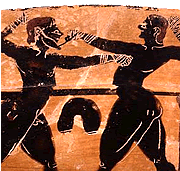 [6.9.6]
At the Festival previous to this it is said that Cleomedes
of Astypalaea killed Iccus of Epidaurus during a boxing-match.
On being convicted by the umpires of foul play and being
deprived of the prize he became mad through grief and
returned to Astypalaea. Attacking a school there of
about sixty children he pulled down the pillar which
held up the roof.
[6.9.6]
At the Festival previous to this it is said that Cleomedes
of Astypalaea killed Iccus of Epidaurus during a boxing-match.
On being convicted by the umpires of foul play and being
deprived of the prize he became mad through grief and
returned to Astypalaea. Attacking a school there of
about sixty children he pulled down the pillar which
held up the roof.
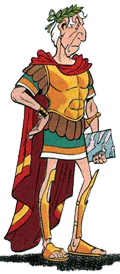
Julius Caesar, Emperor
of Rome, becomes a God In 44BC right after Julius Caesar was murdered, his body was carried to the Roman forum so everyone could have a look see. A crowd gathered. Some guy named Anthony gave a little talk in which he said Caesar was divine.One thing lead to another and by and by Rome had this thing called the Imperial Cult. First Julius then other dead Caesars were voted by the Roman senate to be divine. Somebody built temples to them, where people actually worshiped and prayed to the dead guy who was now a God living in Heaven.
|
|
|
Ovid wrote it all up in a famous poem book called Metamorphoses. Because I am not a sissy I do not normally read poem books, but for you I've excerpted the Julius Caesar apotheosis bit of Book 15 of the Metamorphosis. You are welcome. The original lines were written in latin dactylic hexameter. The lines in the translation are not. I find this sullies not a jot my reading them enjoyment. Metamorphosis came out in 8 AD (though people at the time didn't know that). |
|

Caesar is a God. >> |
[page 417] ... Caesar is God in his own city. Him, illustrious In war and peace, not so much his wars triumphantly achieved, his civic deeds accomplished and his glory quickly won, changed to a new heavenly body, a flaming star; but still more his offspring deified him. |
| Not only is Caesar is a God, he's the father of our current Emperor. >> Sometimes ancient writers like Ovid come across as pathetic groveling suck ups. Because they were. They had to be. On account of how ancient culture put power in the hands of a few rich guys and all. Although this is disgustingly un-American, I have learned to get over it, and accept them as people of their time and place. Anyway, the point Ovid is building to is, Julius Caesar is especially swell because he is the father of our current emperor, Augustus Caesar. |
For there is no work among [page 419] all Caesar's achievements greater than this, that he became the father of this our Emperor.....With him as ruler of the world, you have indeed, O heavenly ones, showered rich blessings upon the human race! So then, that his son might not be born of mortal seed, Caesar must needs be made a god. |
| The Gods knew the
coup plotters were, um, |
|
| But even the Gods
are powerless to, um, |
The anxious goddess cried these complaints throughout the sky, but all in vain. The Gods were moved indeed ; and although they were not able to break the iron decrees of the ancient sisters [fate] , |
|
|
still they gave no uncertain portents of the woe that was at hand. They say that the clashing of arms amid the dark storm-clouds and fear-inspiring trumpets and horns heard in the sky forewarned men of the crime ; also the darkened face of the sun shone with lurid light upon the troubled lands. Often firebrands were seen to flash amidst the stars; often drops of blood fell down from the clouds ; the morning-star was of dusky hue and his face was blotched with dark red spots, and Luna's chariot was stained with blood. In a thousand places the Stygian owl gave forth his mournful warnings ; in a thousand places ivory statues dripped tears, and in the sacred groves wailing notes and threatening words were heard. No victim sufficed for expiation; the liver warned that portentous struggles were at hand and its lobe was found cleft amidst the entrails. In the marketplace and around men's houses and the temples of the Gods dogs howled by night, the shades of the silent dead walked abroad and the city was shaken with earthquakes. |
| Caesar got stabbed anyway. >> |
Yet even so, the warnings of the Gods were unable to check the plots of men and the advancing fates. Naked swords were brought into the sacred curia; for no place in the whole city would do for this crime, this dreadful deed of blood, save only that. |
| After which God the Father up in Heaven said Caesar would be raised up to heaven, and be worshiped on Earth. >> |
|
Ovid was able to quote God the Father word for word, including a number of His prophecies. >> (You will be amazed to learn, all these prophecies actually came true!)
|
"When peace has been bestowed upon all lands he shall turn his mind to the rights of citizens, and as a most righteous jurist promote the laws. By his own good example shall he direct the ways of men, and, looking forward to future time and coming generations, he shall bid the son: born of his chaste wife, to bear his name and the burden of his cares; |
Blah, blah heaven. Blah blah soul.
|
and not till after he as an old mail shall have equaled Nestor's years shall he attain the heavenly seats and his related stars. Meanwhile do thou catch up this a soul from the slain body and make him a star in order that ever it may be the divine Julius who looks forth upon our Capitol and Forum from his lofty temple." |
|
Caesar's soul ascended to heaven. >> |
Scarce had he spoken when fostering
Venus took her
place within the senate-house, unseen of all, caught
up the passing soul of her Caesar from his body, and
not suffering it to vanish into air, she |
|
|
|
| Ovid, Metamorphosis,
Book 15 (8 AD), -- which you can find in: Miller, Frank
Justus. Ovid
Metamorphoses (1916), pg. 417 ff
|
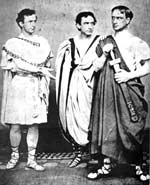 When
the golden mother of Aeneas saw ....that an armed conspiracy
was forming, she paled with fear and cried to all the
Gods as she met them in turn: "....Look!
do you not see that impious daggers are being whetted?
Ward them off, I pray, prevent this crime and
let not Vesta's fires be extinguished by her high-priest's
blood ! "[page 421]
When
the golden mother of Aeneas saw ....that an armed conspiracy
was forming, she paled with fear and cried to all the
Gods as she met them in turn: "....Look!
do you not see that impious daggers are being whetted?
Ward them off, I pray, prevent this crime and
let not Vesta's fires be extinguished by her high-priest's
blood ! "[page 421]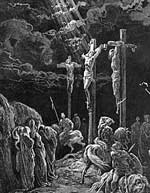 But
the Gods did send signs, aka "portents",
of the great man's death. Stuff like
But
the Gods did send signs, aka "portents",
of the great man's death. Stuff like 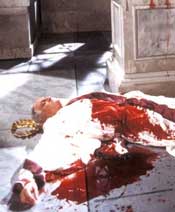
 ...
Then thus
...
Then thus He
as successor to the name
He
as successor to the name 
 bore
it towards the stars of heaven.
bore
it towards the stars of heaven. And
when the current Emperor, who is a swell guy, eventually
dies —which I really hope will be a long long
time from now — he too will ascend to heaven and
become a God.
And
when the current Emperor, who is a swell guy, eventually
dies —which I really hope will be a long long
time from now — he too will ascend to heaven and
become a God.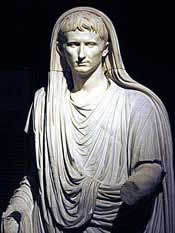 And
now, beholding the good deeds of his son, he confesses
that they are greater than his own, and rejoices to
be surpassed by him..../far distant be that day and
later than our own time when
And
now, beholding the good deeds of his son, he confesses
that they are greater than his own, and rejoices to
be surpassed by him..../far distant be that day and
later than our own time when
|
No
surprise |
| Common Sense | Swell Guy | Greek Religion | Bible Religion |
Greek Religion
Glycon |
|
Although Glycon and his prophet Alexander had other powers too. Stuff like healing the sick and raising the dead. >> |
[Chapter 24] By now he was even sending men abroad to create rumors in the different nations in regard to the oracle and to say that he made predictions, discovered fugitive slaves, detected thieves and robbers, caused treasures to be dug up, healed the sick, and in some cases had actually raised the dead. |
| Lucian, Alexander
the False Prophet, Chapter 24 (2d Century AD), -- which
you can find in: Harmon, A. M. Lucian
Volume IV (Loeb #162) (1953 / 1999), pg. 206- 7
|
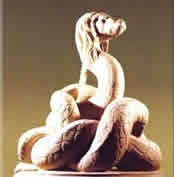
Asclepius healed the sick and raised the dead. |
"Asclepius was the son of Apollo [a god] and Coronis [a mortal woman—is the pattern sinking in here?]...he healed many sick whose lives had been despaired of, and... he brought back to life many who had died." |
||||||
| [Diodorus Siculus, The Library of History, 4.7.1.1- 2; Loeb 303] |

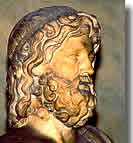

| Asclepius raised at least six dead men:
|
"I found [in writing this history] some who are reported to have been raised by him [Asclepius] , to wit, Capaneus and Lycurgus, as Stesichorus [645- 555 BC] says... Hippolytus, as the author of the Naupactica reports[6th century BC], Tyndareus, as Panyasis [c. 500 BC] says; Hymnaneus, as the Orphics report; and Glaucus...as Melasogoras [5th century BC] relates." |
| Apollodorus, The Library, 3.1.3- 3; Loeb |
| and |
"When Hippolytus was killed,...Asclepius raised him from the dead." [Pausanias, Corinth, Description of Greece, 1.27.5] |
| |
93. Before arriving at the Ister, the first people whom he subdued were the Getae, who believe in their immortality. …. 94. The belief of the Getae in respect of immortality is the following. They think that they do not really die, but that when they depart this life they go to Zalmoxis... 95. …. While he was acting in this way, and holding this kind of discourse, he was constructing an apartment underground, into which, when it was completed, he withdrew, vanishing suddenly from the eyes of the Thracians, who greatly regretted his loss, and mourned over him as one dead. He meanwhile abode in his secret chamber three full years, after which he came forth from his concealment, and showed himself once more to his countrymen, who were thus brought to believe in the truth of what he had taught them. Such is the account of the Greeks. |
|
Herodotus, The
Persian Wars, 4.93- 6 (c 440 BC), -- which you can
find in: Godolpin, Francis. The Greek Historians (1942),
pg. 259- 60 |
Hercules |
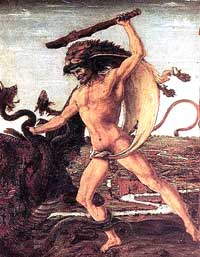
| I admit it's a bit hard for me to take Hercules seriously, Him being a comic hero from my yout' and all. The ancients though did take Him seriously. Ovid describes >> The godman Hercules died. His body was purified in a fire—the mortal part burned away, leaving just the immortal God part. Then His God part ascended to heaven where he became a full fledged God.
|
....Meanwhile, whatever the flames could destroy, Mulciber had now consumed, and no shape of Hercules that could be recognized remained, nor was there anything left which his mother gave. He kept traces only of his father; and as a serpent, its old age sloughed off with its skin, revels in fresh life, and shines resplendent in its [page 23] bright new scales; so when the Tirynthian put off his mortal frame, he gained new vigor in his better part, began to seem of more heroic size, and to become awful in his godlike dignity. Him the Almighty Father sped through the hollow clouds with his team of four, and set him amid the glittering stars. |
 Scorn
not those flames!
Scorn
not those flames! |
Hercules ascended to Heaven through the clouds. >> |
....Meanwhile, whatever the flames could destroy, Mulciber had now consumed, and no shape of Hercules that could be recognized remained, nor was there anything left which his mother gave. He kept traces only of his father; and as a serpent, its old age sloughed off with its skin, revels in fresh life, and shines resplendent in its [page 23] bright new scales; so when the Tirynthian put off his mortal frame, he gained new vigor in his better part, began to seem of more heroic size, and to become awful in his godlike dignity. Him the Almighty Father sped through the hollow clouds with his team of four, and set him amid the glittering stars. |
Ovid, Metamorphosis, Book 9 (8 AD), -- which you can find in: Miller, Frank Justus. Ovid Metamorphoses (1916), pg. 22-4 |
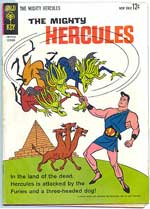
Have you ever heard a more ridiculous myth? Yes you have. |
| Common Sense | Swell Guy | Greek Religion | Bible Religion |
Bible Religion
|
|
17 Some time later the son of the woman who owned
the house became ill.
He grew worse and worse, and finally stopped breathing.
18 She said to Elijah, “What do you have against
me, man of God? Did you come to remind me of my sin
and kill my son?” |
| Old Testament, 2 Kings (author unknown) Chapter 17 |
|
|
said to David,
Know you assuredly, that you shall go out with me in
the host, you and your men. |
| OT 1 Samuel (author unknown) 1 Samuel 28, which you can read at Perseus. |
|
|

Book 2, Chapter 54. |
|
Book 2, Chapter 55. But the question is, whether any one who was really dead ever rose with a veritable body. Or do you imagine the statements of others not only to be myths, but to have the appearance of such, while you have discovered a becoming and credible termination to your drama in the voice from the cross, when he breathed his last, and in the earthquake and the darkness? That while alive he was of no assistance to himself, but that when dead he rose again, and showed the Marks of his punishment, and how his hands were pierced with nails: who beheld this? A half-frantic woman, as you state, and some other one, perhaps, of those who were engaged in the same system of delusion, who had either dreamed so, owing to a peculiar state of mind, or under the influence of a wandering imagination bad formed to himself an appearance according to his own wishes, which has been the case with numberless individuals; or, which is most probable, one who desired to impress others with this portent, and by such a falsehood to furnish an occasion to impostors like himself." |
|
| |
Book 2, Chapter 56. [ORIGIEN
REPLIES -- CONFIRMING THE PRESENCE, AND CURRENCY-- OF
THE MYTHS] |
| Origen, Against Celsus,
2.54- 5 |
| |
|
